
Park n Rides don’t work according to WSDOT’s Millar
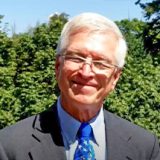
By Representative John Ley
18th Legislative District, Washington State
As taxpayers across Southwest Washington look closely at state and local spending, one project demands immediate, rigorous scrutiny: the Interstate Bridge Replacement (IBR) program and its expanding light rail component.
What was pitched to the public as a crucial effort to replace an aging bridge over the Columbia River has evolved into a massive multi-billion-dollar transit expansion. At the center of this growing scope is a 3.2-acre vacant lot next to the Vancouver Community Library—a site slated to become an $87 million multi-level Park-and-Ride.
Below is a detailed breakdown of what is happening, where your tax dollars are going, and why state transit policy needs an urgent course correction.
1. The $20 Million Downtown Land Deal
In June 2023, the City of Vancouver acquired 3.2 acres of vacant land adjacent to the Vancouver Community Library downtown. The deal came with a heavy price tag and complex financing:
| Vancouver Downtown Land Purchase |
| Upfront Cash Price | $12,000,000 |
| Business Tax Credits | $8,000,000 |
| Total Acquisition Value | $20,000,000 |
To fund the upfront cash payment, the city drew from three internal sources:
- $4,000,000 borrowed from the City Water Fund (3-year repayment timeline).
- $4,000,000 borrowed from the City Parking Fund (10-year repayment timeline).
- $4,000,000 drawn from Real Estate Excise Tax (REIT) revenues.
2. $87 Million for 400 Parking Spaces
The proposed plan for this 3.2-acre site is the Evergreen Park-and-Ride, designed to serve as the terminus for the TriMet MAX Light Rail extension into Vancouver:
- Capacity: 400 parking spaces across multiple levels (including below-grade parking).
- Access: Elevators and stairwells connecting commuters to the light rail platform.
- Estimated Cost: $87,000,000 in taxpayer funding.
At $87 million for 400 spaces, the project calculates to over $217,000 per parking spot.
This is not the only parking structure planned. Across the full project scope, the IBR program proposes constructing 1,270 Park-and-Ride spaces across multiple locations near the library and the Vancouver waterfront.
3. Do Park-and-Rides Actually Work in Washington?
The push for heavy park-and-ride infrastructure directly contradicts warnings from state transportation leadership.
Former Washington State Secretary of Transportation Roger Millar repeatedly cautioned the IBR Executive Steering Group that large park-and-ride facilities have proven ineffective across Washington State. High operational costs, low utilization rates compared to local bus feeder networks, and shifting commuter habits make large multi-story parking structures an inefficient use of public capital.
4. The $3.5 Billion Transit Component
When the original Columbia River Crossing (CRC) project was debated years ago, the entire bridge and highway corridor project was estimated at $3.5 billion.
Today, state officials confirm that the transit component alone of the IBR project has reached $3.5 billion.
| Project Cost Comparison over Time |
| Original CRC Total Project Cost | $3.5 Billion |
| Current IBR Transit Component | $3.5 Billion |
| Current Total Estimated IBR Scope | $15B |
With overall IBR program estimates escalating toward $15 billion due to extended timelines and risk factors, prioritizing high-cost light rail infrastructure over direct congestion relief raises serious financial concerns for Washington drivers and taxpayers.
5. The Way Forward: Accountability and Fiscal Common Sense
Transit policy should prioritize cost-effective mobility, traffic congestion relief, and financial sustainability. Rather than sinking billions into light rail extensions and multi-million-dollar parking structures, state leadership must consider:
- Expanding Bus Rapid Transit (BRT): Flexible, lower-cost BRT options (like C-TRAN’s successful local service) deliver transit connections without massive capital debt.
- Focusing on Congestion Relief: The main goal of replacing the I-5 bridge must remain adding highway capacity, improving freight movement, and reducing daily commute bottlenecks.
- Protecting Local Taxpayers: Preventing Washington drivers from absorbing disproportionate tolling burdens and unbudgeted transit operational deficits.
Stay Informed & Get Involved
Your tax dollars are funding these decisions. To learn more about legislative efforts to bring fiscal accountability to Southwest Washington transportation projects, visit Rep. John Ley’s Official Legislative Page.
For a full breakdown of the proposed Light Rail terminus and Park-and-Ride sites in downtown Vancouver, watch Rep. John Ley’s on-site video report addressing the Interstate Bridge Replacement program.