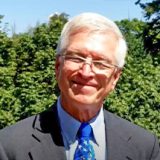
Rep. John Ley joined Lars Larson on The Lars Larson Show on Sept. 2 to discuss new concerns over the Interstate Bridge Replacement Program’s spending, design progress and rising cost.
During the interview, Ley said the IBR had spent $321 million as of the end of June. He noted that the project is only 30% designed after six and a half years.
Ley also pointed to the earlier Columbia River Crossing effort, saying the current spending comes on top of money already spent on the failed CRC. He said that, taken together, more than half a billion dollars in public money has been spent while the region still does not have a new bridge.
The project’s rising price tag was another major focus of the interview. Ley said the cost has tripled to more than $15 billion since the program began. At the same time, he said the project only has about $4 billion to $5 billion available.
Ley argued that lawmakers in both Washington and Oregon need to take a much harder look at the project’s components and funding. He said the IBR has a list of 30 components, but only four are funded.
Rather than continuing with an oversized project, Ley said legislators should cut unnecessary pieces and focus on a basic, affordable bridge that can be built within the money available.
Ley also repeated several concerns about the current proposal, including that it does not fix traffic congestion, includes a bridge he says is too low, and allocates too much space to transit, bikes and pedestrians.
The interview also covered oversight concerns. Ley criticized the project’s consulting costs, saying the original contract called for delivery of the federal record of decision for $44 million, but the project has now spent $321 million. He said the increase shows a lack of accountability and oversight from transportation officials in both states.
For Ley, the bottom line is that transportation dollars are limited, and Washington and Oregon have many other transportation needs. He said lawmakers should reduce the IBR to the essentials and stop allowing the project to grow beyond what taxpayers can afford.
The full captioned video of Rep. Ley’s conversation with Lars Larson is available above.
Transcript
[00:00] Lars Larson: Lars Larson. Welcome back. The Lars Larson Show, it’s a Wednesday. It’s the Radio Northwest Network, and it’s my pleasure to be with you. And you’re invited to the conversation, although I want to talk to John Ley first. John, of course, is a state representative who represents people in District 18, Position 2. And the issue I want to put in front of John, because John, John actually brought it to me. And he said, look at this. The Interstate Bridge project, this is a, this is, I guess, 2.0 of the attempts to build a bridge.
[00:29] Lars Larson: Across the Columbia River to carry Interstate 5, the big connector that goes all the way from Canada to Mexico, and its biggest choke point is right there on the Columbia River between Oregon and Washington. And already, they have spent a colossal one third of a billion dollars, and they don’t have much to show for it except a big pile of paper. Representative Ley, welcome back to the program. Tell my audience about this. Hey, Lars, thanks so much. Monday, the IBR updated
[00:59] Rep. John Ley: their spending as of the end of June, and they’d spent $321 million so far. And of course, as you and I have talked about many times, that’s on top of the 200 million. They wasted on the failed CRC. So in reality, that’s over half a billion dollars of the people’s money. And the project is only 30% designed after six and a half years. What a huge waste of people’s money, number one. Number two, understand, the IBR—
[01:29] Rep. John Ley: Six and a half years since this got started, the cost is triple to over 15 billion dollars. And so many facets of this are horrible. The alleged locally preferred alternative is preferred by nobody. It doesn’t fix traffic congestion, and its bridge is too low. It allocates 54% of the space to transit bikes and pedestrians. And it’s only less than a third designed. It’s a huge waste of the people’s money.
[01:58] Lars Larson: I guess part of what I don’t understand about this, Representative Ley, is that Donald Trump has a Transportation Secretary. We’ve tried to get him on this show because I wanted to ask him, are you still going to provide federal funding for a project that is this seriously flawed? I mean, flawed in its design, flawed in its approval, as you said, it’s too expensive, it’s too low. It has light rail that nobody wants. It’s got all these flaws to it, and it doesn’t change traffic congestion at all.
[02:27] Lars Larson: And ask why is the Trump administration still backing this? And as of today, we can’t get the Transportation Secretary or a surrogate to come anywhere near us to answer that question.
[02:39] Rep. John Ley: Yeah, I’d love to have a meeting, have him chat, just be honest with the people. Please, I think if they looked at the details of this, they would say, whoa, just like they pulled federal funding from the California high speed rail boondoggle.
[02:54] Rep. John Ley: Yeah, they need to look at this and if they understand this boondoggle, they’d pull federal funding. I mean, look, they already pulled several hundred million dollars from the I-5 Rose Quarter project that has now exploded to over three billion dollars. And there is a huge hole on that three billion dollars potentially shortfall there.
[03:17] Rep. John Ley: And so this is the largest public works project in the history of the two states. And it’s out of control. And we definitely need some responsible oversight of this, which the two DOT secretaries, frankly, in Washington and Oregon are not providing that necessary oversight.
[03:35] Rep. John Ley: And that’s where I want to as a legislator throw the BS flag.
[03:38] Lars Larson: Well, and the other thing I’m worried about, John, because the state of Oregon and state of Washington both have a similar pattern, they will promise to build a project they get well into the project, then they announce it’s going to cost a lot more. So either give us the money.
[03:52] Lars Larson: We can’t go backwards on this and they will they will underbid something. They will understate what the cost of something is. And then once they’re too far into it to turn around and go back the other direction, they’ll then just tell the the taxpayers and the lawmakers.
[04:06] Lars Larson: You’ve got to fund this thing and you’ve got to give us more money because you can’t leave it half done. That’s the pro that’s the that is the pattern they have shown in all these projects. And I’m afraid on this one, they’re going to get us into this project far enough. And then say, by the way, there are tens of billions of dollars still needed to fund this thing. And you don’t have the choice not to pay for it.
[04:28] Rep. John Ley: Yeah, in reality, they’ve got around $5 billion, which is a stretch on this $15 billion project. Nobody would start building a house if you only had a third of the money.
[04:43] Rep. John Ley: And so what they’re proposing now is to put it in two phases and phase one, they still admit they’re over $2 billion short of the money needed to build phase one. That is absolutely outrageous.
[04:58] Rep. John Ley: In reality, we’ve got about $4 billion, 2.1 billion from the feds a billion each from Washington and Oregon. And so what the legislators need to do on both sides of the river is go down the list of the components of this and the IBR has a list of 30 components that they admit only four of them are funded.
[05:20] Rep. John Ley: And the legislators just need to slash and burn saying, no, no, no. And in the end, they could build a bare bones bridge with no extras for that $4 billion. And say, no more, we’ve got so many needs on both the Washington side and the Oregon side for those transportation dollars.
[05:40] Rep. John Ley: And they just need to say enough, no more. A different facet of all of this, my friend, is that WSP, who is their primary consultant on this whole boondoggle, they signed an original contract six years ago that said they would deliver the federal record of decision for $44 million.
[06:01] Rep. John Ley: They’ve now spent $321 million delivering that. That’s a sevenfold increase. And the two states, DOT Secretary simply rubber stamped that sevenfold increase in taxpayer money. It just shows their total lack of oversight.
[06:17] Lars Larson: I want people to understand this. I mean, imagine if you had gone to any contractor and you said, I need this done for my house. I need a new kitchen or I need a new bathroom or whatever it is. And they gave you a number like that $44 million number. And then, you know, the contractor came in and is doing the job and right in the middle of it, he says, no, this is going to cost seven times as much money as I promised. And you say, no, you promised in writing that you will deliver it for this price.
[06:46] Lars Larson: But the people who represent the people of Oregon, Washington, the representatives within the government, both elected reps like you, but also people who work within the bureaucracy have chosen not to hold the contractor to the letter of what they signed their name to.
[07:02] Rep. John Ley: Yeah, it’s ridiculous. And in essence, we’re rewarding them for either incompetence or lying to us as legislators and more importantly misleading the people of both states. And that shouldn’t be tolerated. And frankly, the federal government needs to come in and say, we’re not going to spend a dime of our money if you’re misleading the people. And if you’re allowing the theft of the people’s money, you’re rewarding a consultant that clearly can’t consult.
[07:31] Rep. John Ley: In any level of accuracy. And a different aspect of this is I’m not forgetting that the IBR staff and their leadership chose to hide the actual cost increases from legislators and the people a year ago.
[07:47] Rep. John Ley: We had two meetings that they promised to give us the new cost estimates. And they withheld that information both times.
[07:55] Lars Larson: And they kept everybody in the dark. That’s representative John Ley. He represents district 18 Position 2.