
Two Washington ship builders refuse to bid
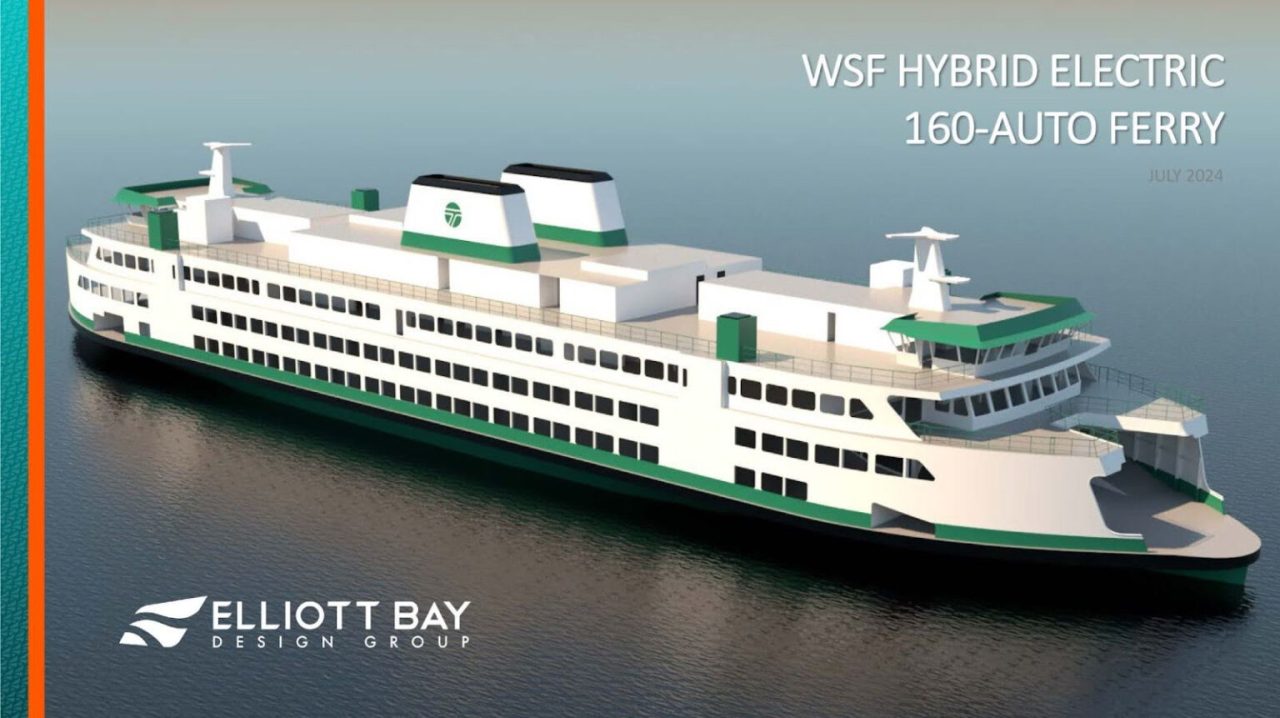
Florida firm awarded contract for 3 new ferries for state ferry system
The Washington State Ferry System has a problem — many of their ships are old and beyond their useful life. A contract was awarded to a Florida boat builder for 3 hybrid diesel-electric ferries. Why? They’re cheaper. And TWO Washington firms refused to bid on the contract.
The WSF is the largest ferry system in the nation. The legislature has had a preference for ships built in state in the past. This time they gave in-state ship builders a 13 percent “credit” in an effort to tip the scales towards Washington shipyards. That meant their offer could be 13 percent higher than an out-of-state ship builder and still be considered “equal” to win the work. This is the first time in roughly 50 years an out of state shipyard wins the bid.
Vigor has a shipbuilding facility in Vancouver, just east of the historic Kaiser Shipyards. They declined to bid on the recent WSF contract for 3 hybrid electric ferries.
Governor Ferguson awarded a $714 million contract to Eastern Shipbuilding Group in Florida to build three hybrid-electric ferries. The first one will cost $405 million, the second $360 million, and the third one $325 million.
Two Washington state firms, including Vigor which has facilities in Vancouver, chose NOT to bid. Apparently WSDOT has been difficult to work with in the past, according to Vigor. Only two firms provided a bid.
The cost of the state buying a ferryboat has tripled since 2018. One news report:
The 144-car Suquamish was the most recent of the workhorse Olympic-class ferries upon which the new plug-in ferry design is based. The diesel-powered Suquamish was delivered to WSF in 2018 at a cost of about $122 million. Debate about how to proceed with further vessel acquisitions in that size class has stretched from then until now.
Where’s the value in paying triple the cost?
Your tax dollars are funding these new ferries. It is estimated that passenger fares only cover about 60 percent of operating costs for the WSF system. None of the capital costs are covered by passenger fares.
We must apply common sense in using your transportation tax dollars to deliver improvements to the entire Washington state transportation system.
Is it worth spending three times the money?
Nitrogen Oxides (NOx): Clean diesel technologies can reduce NOx emissions by up to 80% compared to conventional diesel engines.
Particulate Matter (PM): Emissions of particulate matter can be reduced by 30-50% with clean diesel engines.
Carbon Dioxide (CO2): While CO2 emissions may not differ drastically, clean diesel engines often achieve better fuel efficiency, indirectly reducing overall CO2 output.
The hybrid diesel electric vehicles still have CO2 emissions. Creating a shore-power system for them to plug into is extremely expensive and has many logistical problems.
From one news report: BC Ferries has also been in the market for new car ferries and has been able to acquire new vessels at far lower cost. Unlike Washington State Ferries, BC Ferries can solicit bids from shipyards worldwide. This past month, the privatized provincial ferry company stirred considerable controversy at home by announcing it would contract with a Chinese shipyard to acquire four large new car ferries. BC Ferries declined to specify the price, but made clear that no other bidders came close to the cost savings the Chinese state-owned yard offered.
Building ferries to serve domestic U.S. routes at a foreign shipyard is prohibited under a century-old federal law known as the Jones Act.
Taxpayers deserve better than paying triple the price for replacement ferries.